History
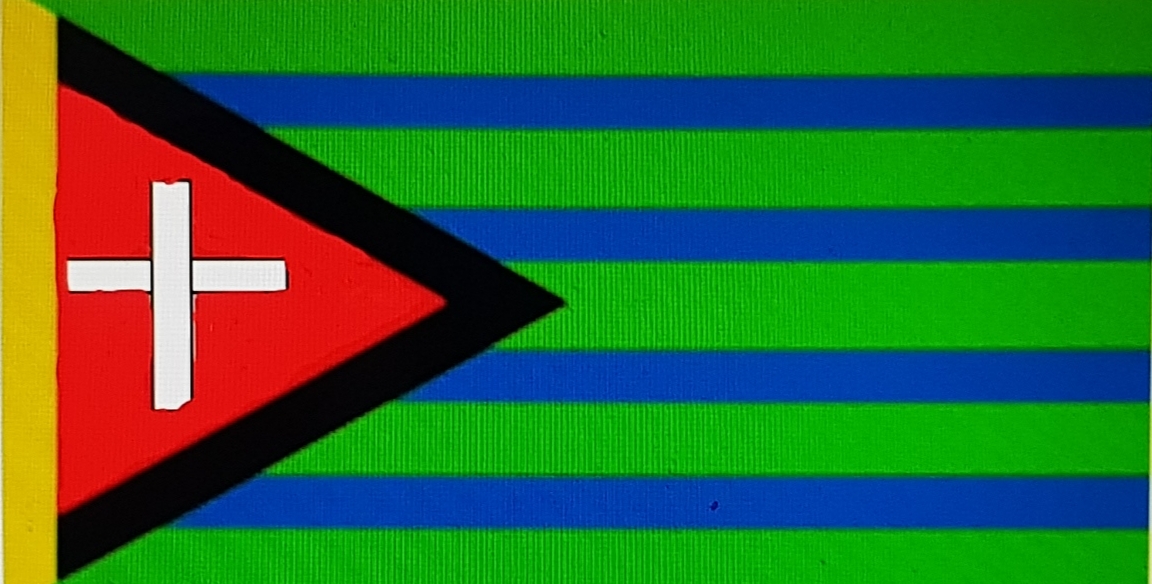
Country name: PAANYWAA REPUBLIC
Continent: Africa
Area: 38,783 km2
Population: 1.1 m
Language: Dhaa-Anywaa
Capital: Cwaay
Currency: Demuy
Type of government: Federal presidential constitutional republic
Current leader: Morcen Ojwok Omot
Paanywaa lies between the Ethiopian, South Sudan, and Kenya to the south. It is a land dissected by five principal rivers: the Akobo, Gilo, Alworo, Oboth, and Openo. This country has nine Administration States, Adongo, Ciro, Nyikaani, Alworo, Joor, Tier Naam, Openo, and Ojwaa, under one Nyeya (king) rule.
Each state has its autonomous administration. They can choose from Anyuak political Systems, Nyech (king), or Kwar (headman-ship). Nyech is a system inherited from family to family, and Kwar is a public administration decided by the people. The integrity of Anywaa land ended when it came under nominal British control from the 19th to 20th Century followed by Ethiopia invasion”.
In 1910, Anyuak country, under the rule of King Akway Cham, emerged toward modernization, but modernization was interrupted by the British invasion in 1912, followed by an arms embargo. However, it continued to exist as a nation until the death of King Akway Cham in 1920. “In the same year, in 1920, the British indirectly annexed Anyuak country to Sudan and set up trade posts in Gambela until 1947. In November 1930, Sir John Maffey and Harold Mac Michael represented Sudan at the coronation ceremonies of Haile Selassie in the renewal of negotiation to convince central government at Addis Ababa to expand their empire over Gambela”. Again, British representatives from London and Khartoum in Addis Ababa had continually exhorted the Ethiopians to administer the Anyuak of the Gambela in 1932, which coincided with Haile Selassie’s determination to consolidate his imperial authority below the bluff.
“In 1937, the British ambassador in Rome called for the reunification of Anyuak land to be returned to Olemi Akwon, the South’s king. It was not until 24 April 1956 a Sudanese delegation consisting of Sayyid M. O. Yassein and the permanent undersecretary from the Ministry of Foreign Affairs met in Addis Ababa with the Ethiopian vice-minister for Foreign Affairs, Blatta Dawit Ogbagzy and, from the Ethiopian Finance Ministry, Ato Menassie Lemma, and agreed to hand over Gambella to the Imperial Ethiopian government on 15 October 1956” with no consent of leaders.
Paanywaa has natural resources such as water, fish, animals, forest, gold, Tungsten, oil, zinc, and many more to be discovered.
Here are the five facts About the 2003 Anyuak Genocide.
- The Persecuted: The Anyuak people are a majority ethnic group that occupies southwest Ethiopia and parts of South Sudan. Most Ethiopian Anyuak live in the Gambella forest region, where they have hunted and cultivated agriculture for centuries. Contemporary Anyuak are evangelical Christians—only a few still practice tribal traditions within their tight-knit villages. Over 10000 Anyuak refugees from Gambela, Ethiopia, still live in South Sudan, Kenya, Uganda, and Sudan.
- When the Genocide Happened: The Gambella Genocide happened on December 13, 2003. It is essential to notice that this was not an isolated incident but a continuation of decades of racial discrimination. In 1979, the government seized Anyuak land to access fertile grounds for farming in the name of economic expansion. The Ethiopian government then relocated peasants into the land over the next decade. Many Anyuak fled the country throughout the 1990s to avoid further civil unrest. Over 10,000 Anyuak settled in the United States, most of whom lived in Minnesota through a refugee program. Over 5000 thousand live in Kenya refugees for nearly two decades. The 2003 Genocide was neither the beginning nor the end of their suffering. Raids that destroyed many villages drove 10,000 Anyuak people out of their homes throughout the following year.
- What Happened During the Genocide: Ethiopian soldiers carried out the massacre in conjunction with members from other local tribes. Ethiopian government absolved the military of any blame for the Genocide, but eyewitnesses say it was a coordinated attack. Eyewitness accounts said that soldiers raided Anyuak homes, dragged out their residents, and shot them. Meanwhile, members of other tribes were attacking the Anyuak with machetes. The soldiers then burned down the houses. A survivor reported that they had collected 403 bodies by the end of the day of the Genocide. Anyuak refugees in the United States received phone calls from relatives reporting such events. The Ethiopian Federal Minister of the Gambella region tried to suppress the accusations, calling them fabrications. However, the World Organization Against Torture and Genocide Watch (WOATGW) has corroborated the reports to keep others from pushing them into obscurity. At the end of the Genocide, the number increased to 3165 people.
- The Reasons for the Genocide: There are no justifications for ethnic cleansing, but a vicious cycle of retribution killings can trigger catastrophic events. Tensions in the Gambella region were high. The Second Sudanese Civil War (1983-2005) displaced over 100,000 refugees onto Anyuak land. The Ethiopian government mistreated Anyuak, and they always favor Refugees whenever there is violence against the host community. Ethiopian people hate the Anyuak because, historically, they are not Ethiopian. Second, they claim that Anyuak does not deserve the land they live in. The Genocide commenced as a counterattack against the Anyuak people after unknown shooters allegedly ambushed a car containing eight government administrators. Today, the silent Genocide is still going on.
- The Anyuak People Now: Ethiopian Prime Minister Dr. Abiy Ahmed, elected in April 2018, has formally failed to apologize to the Anyuak people. There is no compensation for the loss of lives and properties. Due to a lack of justice, Anyuak is still suffering in refugee camps for two decades now. The Anyuak intellectual sat down to find a permanent solution for the neglected Anyuak refugees. The outcome of the discussion is that the intellectually recognized Anyuak referendum is the only solution that guarantees the rights of Anyuak to exist and the return of refugees from neighboring countries.
The United Paanywaa Movement was established early in February 2020 to be a platform to fight for the reunification of Paanywaa (Anyuak country) toward its people’s modernization and security. This political party has different strategies to battle for the neglected people of Paanywaa than the previous attempt, which did not bear the fruit of freedom. United Paanywaa Movement is committed to the rule of law, accountability, and equal justice for all, regardless of where you come from, faith, and gender.