
JANUARY 25, 2022
AGREEMENT ON PAANYWAA REFERENDUM
PROPOSAL TO UNITED NATIONS AND SECURITY COUNCIL
Reported to the security council
711 Third Avenue, Suite 1501
New York, NY 10017
Telephone 212-759-9429
Fax 212-759-4038
Email contact@securitycouncilreport.org
AFRICAN UNION
PO. Box 3243. Roosevelt Street W21K19
Addis Ababa, Ethiopia.
PROPOSED BY THE CABINET AND COUNCIL MEMBERS OF
UNITED PAANYUAA MOVEMENT (U.P.M.)
SKOVPARKEN 15, 6000 KOLDING DENMARK
Tel: +4552636451
Email: paanyuaa@gmail.com
AGREEMENT ON PAANYWAA REFERENDUM
THROUGH PEACEFUL VOTE
BETWEEN
THE GOVERNMENT OF ETHIOPIA, SOUTH SUDAN.
AND
THE PEOPLE OF PAANYWAA UNDER THE UNITED
PAANYWAA MOVEMENT
(U.P.M.)
TO BE HOSTED BY UN: IN GENEVA, SWITZERLAND/ TANZANIA.
TABLE OF CONTENT
Preamble…………………………………….……………………………………………….1
Guiding Principles……………………………………………….…………………………2
Establishment of Paanywaa self-administration…………………………………….3
Establishment of state and counties in Paanywaa……………………….……… ..4
Government Structures of Paanywaa (Gambela, Pochalla, and Akobo) ……….5
Parliament…………………………………………………….…………………………….6
The Judiciary…………………………………………………………….…………….……7
Development Fund………………………………………………….……………………..8
Establishment of other Areas of Executive Bodies…………………………….…..9
Sources of Revenue for PR Administration…… …………………………….….10
Accountability Procedures……………………………………………………………..11
Inter-Governmental Relation during interim period……………………………….12
Security Arrangement………………………………………………………………….13
External Relation ………………………………………………………………….…….14
Amendment ………………………………………………………………………………15
Coming into forces ………………………………………………………………….….16
Implementation Modalities ……………………………………………………………17
Signatures…….……………………………………………………………………….….18
LIST OF ABBREVIATIONS
PAANYWAA: Mean Anyuak Country
UPM: United Paanywaa Movement
PR: Paanywaa Republic
UN: United Nations
AU: African Union
PM: Prime Minister
PPDF: Paanywaa People Defence Forces
ANYUAK: An Ethnic group that owns 90% of Paanywaa land.
PP: Prosperity Party
SSPDF: South Sudan People’s Defence Force
DBC: Database Commission
PRC: Peace and Reconciliation Commission.
PHRC: Paanywaa Human Right Commission
PREAMBLE:1
The United Paanywaa Movement (UPM) and the indigenous population of Gambella, Pochalla, and Akobo, known as Paanywaa (Anyuak Country), appeal to UNSC and the international communities to give them democratic rights by hosting the dialogues between Ethiopia, South Sudan, and Paanywaa. We need Democratic rights and a peaceful Referendum on Paanywaa status to choose between Unity with one government between Ethiopia and South Sudan or independence. There will be an interim period of two years for the people of Paanywaa to prepare themselves ahead of referendums. Ethiopians must not send their army to the Region during the interim period and allow the Paanywaa defense force to control their security. If both governments reject the UN call for dialogue with the people of Paanywaa, any UN member State shall forward the case to ICJ.
DETERMINED to achieve peace and promote Unity amongst the different ethnic communities in Gambella Region, including Anyuak, Majangeer, Churi, Opuo, Olam, Bula, Koomo, and Ethiopian settlers in the Region. However, the Democratic right and peaceful referendum must be given to only the Anyuak ethnic divided between both governments.
COMMITTED to avoid other human rights abuse such as genocide threats, torturing, and prison without trial committed by Ethiopian regimes.
MINDFUL, the Paanywaa requires a peaceful solution to the conflict that marginalized the indigenous population and displaced them.
Paanywaa lost its sovereignty and stability when the British divided them, organized a diplomatic protest in Addis Ababa against trade between Paanywaa and Ethiopia, and imposed an arms embargo on Paanywaa to weaken their power. They also sign multiple agreements on dividing Anyuak land without consultation.
AWARE of current engagement with United Nations Security Council to find a durable solution to the ongoing suffering in the Region. We are all aware that arming struggle is not an option to create a good atmosphere for both sides in this 21 century. As we all know, “Gambella (Paanywaa) has a history that dates to over 2,000 years. A good starting point in analysing the country’s status is the period called Gambelia’s “Freedom age,” when the entire Paanywaa (Anyuak country) was first united under one ruler. There is no serious dispute over the existence of Paanywaa/Gambella as an independent state during this period. Even Ethiopia’s historical records acknowledged the 17th century period referred to Gambella as a strong state.
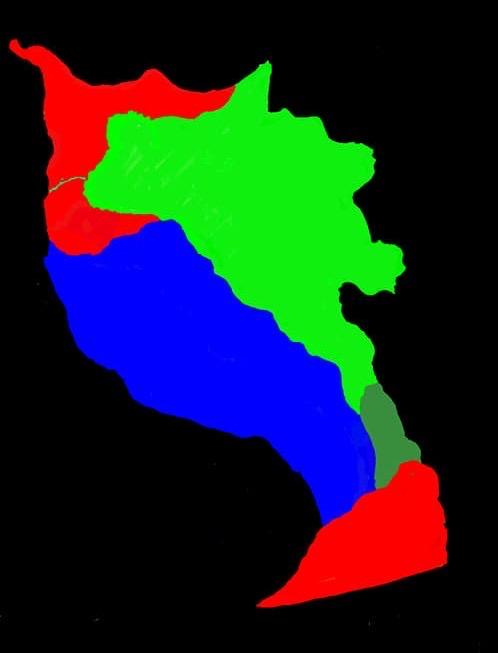
According to rich Gambellans’ oral tradition, Anyuak country lies between the Ethiopian escarpment Southwest to the Pibor river and the Northwest up to Nyium, the present-day Nasir in Sudan.
The integrity of Anywaa land ended when it came under nominal British control from the 17th to the 18th Century, followed by the Ethiopian invasion attempted in 1916″.
CONSCIOUS of ending the division of one family between two nations by foreign powers resulting in marginalization and occupation. We re-united our land by rejecting this deal: “In November 1930, Sir John Maffey and Harold Mac Michael represented Sudan at the coronation ceremonies of Haile Selassie’s renewal of negotiation to convince the central government at Addis Ababa to expand their empire over Gambela”. It is not acceptable.
“Again, British representatives from London and Khartoum in Addis Ababa had continually exhorted the Ethiopians to administer the Anyuak of the Gambela in 1932, coincided with Haile Selassie’s determination to consolidate his imperial authority below the bluff.” We reject it with the strongest terms possible.
“On April 24, 1956, a Sudanese delegation consisting of Sayyid M. O. Yassein and the permanent undersecretary from the Ministry of Foreign Affairs met in Addis Ababa with the Ethiopian vice-minister for Foreign Affairs, Blatta Dawit Ogbagzy and, from the Ethiopian Finance Ministry, Ato Menassie Lemma, and agreed to hand over Gambella to the Imperial Ethiopian government on October 15, 1956, without consent of it leaders.” We reject all those agreements because we were not informed about them.
The UPM and both governments must find a way under UNSC watch to abide by the terms of this agreement and respect its implementation to end decades of suffering.
GUIDING PRINCIPLES: 2
- The Paanywaa has a rich undisputable history of being independent of both nations. Therefore, we have every right to reclaim it by any means necessary.
2.2 Gambela is a home to Anyuak, Majengeer, Opuo, Churi, Olam, Bula, Koomo, and Jie, which shall form a new nation.
2.3 The proposed Paanywaa Referendum for self-rule by UPM shall be done within Gambela, Pochalla, and Akobo, known as Paanywaa (Anyuak country).
2.4 Commitment to lasting solutions to the current root course of Anyuak suffering in the hand of both governments after dividing one society into two. To make it worse, Ethiopian regimes failed to make Unity attractive, promote justice, equality, and respect for human rights, and encourage South Sudanese to take over Anyuak land. These are what make us demand control of our territorial integrity. We have no choice but to reclaim our sovereign land through a peaceful Referendum.
2.5 We are ready to work with both governments to recognize and respond to our call for peaceful dialogue.
2.6 During the implementation of this agreement to reach to Referendum date, the parties shall promote positive communication to make citizens aware of the Referendum process.
ESTABLISHMENT OF PAANYWAA SELF-ADMINISTRATION:3
3.1 There shall be an establishment of self-administration within the territorial of Paanywaa for two years and establish the Paanywaa Republic with its capital city ahead of the referendum.
3.2 The administration boundaries should be demarcated accordingly by United Nations Security Council Monitoring Teams in collaboration with citizens of both sides.
3.3 The Republic of Paanywaa (RP) shall be established under the United Nations mandate collaborating with the Ethiopian Prime minister, South Sudan President, and Paanywaa President of the interim period to sign this agreement in the presence of UNSC.
3.4 The Paanywaa shall be ruled by President whose status is equal to other presidents. He will have external relations during the interim period.
3.5 There shall be a post of Ministerial position to carry on the duties of government branches.
3.6 The Region shall have a provisional seal, flag, and emblem till the day of the referendum.
ESTABLISHMENT OF STATES AND COUNTIES IN PAANYWAA:4
4.1 The Republic of Paanywaa shall be divided into nine (9) states with five counties per state. Governors and commissioners shall govern them. These will come into effect within the second month of signing an agreement.
4.2 The UPM administration shall establish the state and counties in consultation with the citizens of areas democratically and transparently.
GOVERNMENT STRUCTURE OF DEMOCRATIC OF PAANYWAA:5
5.1 The Paanywaa shall be led by the President-elect or a nominee of UPM and be removed by 1/3 majority vote or term limit.
5.2 The president shall be a Commander-in-chief of the Paanywaa People Defence Forces (PPDF).
5.3 The President shall appoint a Deputy and Secretary-General accountable to him.
5.4 The President shall appoint ministerial positions and deputies accountable to the President.
5.5 State can elect their governor and be removable by State Parliament or court of laws in disobedience to state property and population.
5.6 The County commissioner shall be elected by the county council and approved by the governor. He is also removable through impeachment by county council members in case of disobedience to public properties.
PARLIAMENT:6
6.1 During the interim period and after, parliament members from all counties will represent their local areas with the recommendation of UPM. There shall be ten members from each county, five for the national level and five for the state level, in which two out of five shall be women.
6.2 The Republic of Paanywaa Parliament shall enact local and national legislation on the country’s development, governance, and administrative issues.
6.3 The majority shall approve the parliament legislation, and President shall sign them into law.
6.4 Sittings or debating of RP Parliament shall be presided over by a speaker elected from the members of Parliament.
THE JUDICIARY:7
7.1 The Paanywaa shall establish an independent judiciary by opening high law courts to tackle criminals and corruption cases.
7.2 Traditional Leaders/Authority
Historically, the kingdom led this society with the best administration system in its traditional leadership system. This government will honor the king and give him a permanent advisory position to every incoming President on national welfare and tradition.
7.3 Kings have no executive power and shall be responsible for the tradition and cultures of Paanywaa. He has to promote the best part of the culture and the Unity of the society.
DEVELOPMENT FUND:8
8.1 The UPM shall establish an independent development fund during the interim period.
8.2 United Nations shall receive funds from the Ethiopian and South Sudan governments and send them to the people of the Paanywaa government until Independence Day.
8.3 The Paanywaa shall be responsible for its own development decision and exploitation of natural resources.
8.4 The Paanywaa interim government shall use the United States Dollar as its currency during the interimperiod.
8.5 UPM has no interest in power-sharing in the central government in Addis Ababa and Juba if they recognize Paanywaa and come to the table to address the referendum status.
ESTABLISHMENT OF COMMISSION BODIES:9
The Paanywaa administration shall establish the commission’s bodies and committees to carry out the function of the following bodies:
- Database commission (DBC.)
- Paanywaa Relief and Rehabilitation commission (PRRC)
- Peace and Reconciliation Commission (PRC.)
- Paanywaa Human Right commission (PHRC)
SOURCES OF REVENUE FOR REPUBLIC OF PAANYWAA (R.P.) ADMINISTRATION:10
The Paanywaa shall design and legislate the sources of income from the following sources:
10.1 Land and property tax
10.2 Personal income tax
10.3 Natural resources, such as Petroleum, Gold, Tungsten, Metal, and others
10.4 Agriculture production.
10.5 The other sources of revenue shall be discussed in advance.
ACCOUNTABILITY PROCEDURES:11
11.1 The administration of Paanywaa shall establish and accept accountability procedures and legal accountability to ensure that the public funds are allocated and spent according to the government’s proposed budget. We also believe that this country will never be the same as other failed nations. It will be the newly prosperous African nations regarding the economy, social development, and democracy.
INTERGOVERNMENTAL RELATIONS DURING INTERIM PERIOD:12
12.1 The Paanywaa people shall have a trade relationship with neighboring countries and international trade during and after the referendum.
12.2 The Paanywaa people shall have internal and external investment deals during the interim period and after the referendum.
SECURITY ARRANGEMENT:13
This section requires commitment from both parties to ensure they cooperate for a peaceful resolution.
13.1 There shall be no Ethiopian army in Dimma, Godare, Pinyudo, Abwobo, Itang, Joor, and Akobo during the interim period.
13.2 There shall be only a joint integrated unit base in Bonga in which their number will not exceed one thousand from both sides.
13.3 There shall be no SSPDF in Pochalla and Akobo during the referendum as it is for all Anyuak in the Region.
13.4 All those forces will be replaced with the Paanywaa People Defence Force base in all towns and villages to protect and monitor the Referendum process under UPM administration and command to save the boundary of Paanywaa.
13.5 If unity pass, they will be reintegrated into a national army, but if separation pass, they will remain as Paanywaa national army.
13.6 UN or any individual member of the United Nations shall sponsor this referendum and help to train and equip security forces for the safety of civilians and their properties.
EXTERNAL RELATION:14
14.1 During the interim period, Paanywaa people shall have the right to external relationships by linking UN agencies like UNHCR and IOM to repatriate refugees back home within the first year.
14.2 There shall be a direct flight from Gambella Airport to the outside world and from the outside world immediately to Gambella. There shall be freedom of movement and expression for both National and International journalists.
14.3 Any Nation shall establish his/their consulate and Embassy in the Paanywaa during and after the interim period.
AMENDMENT:15
This agreement shall not be amended, altered, or modified unless we have a crucial additional point to be an agreement between two parties. This agreement shall end human suffering in Gambella, Pochalla, and Akobo. The UNSC must persuade both governments to give the people of Paanywaa their right to choose one country between both or independence since both governments do not want to protect and develop them.
COMING INTO FORCE:16
Upon the UN Secretary general approval, this agreement shall come into force and call both nations around the table for dialogue hosted by United Nations in Tanzania. The suffering of the Paanywaa peoples began from British colonial division, which resulted in marginalization, Genocide against ethnic Anyuak, Land grabbing, daily killing, forcing those who spoke out to exile, deportation from neighboring countries, and imprisonment without trial by calling both governments to sign the agreement in Geneva or Tanzania. We brought this case to the UN because it involved more than two nations in destroying the sovereignty of Paanywaa (Anyuak country).
IMPLEMENTATION MODALITIES:17
| Activity | Executive body | Timeline | Composition | Funding | Location | Procedures | Agreement articles |
| Coming into force, the agreement | Prime minister and President | Within 14days of consultation. | UNSC | Geneva | Signing the agreement on the referendum | 2.1 | |
| Appointment of Paanywaa. President | UnitedPaanyuaa Movement (UPM) members | 7 sevenDays after signing a peace | United Nations | Place ofNegotiation. | SwornIn the presence of the UN and both governments | 5.1 | |
| Establishment of the referendum committee | Ethiopia, S. Sudan, and Paanywaa | WithinTen days of sworn In President | fiveMembers fromeach side | United Nations | Paanywaa | Consultation from both parties by the UN. | |
| Establishment of Paanyuaa states | By PaanyuaaPresident | One week after being sworn in | Ninestates | Paanywaa | Paanywaa | Presidential decree | |
| Appointment of state governors | By PaanywaaPresident | Ten days after establishing states | Ninegovernors | Paanywaa | Paanywaa | Presidential decree | |
| Establishment of counties and their commissioners | States governors | One weekAfter appointingState governors | 45 commissioners | Paanywaa | Paanyuaa | Governorship decree | Article 5.6 |
| Security Arrangement committee | PDFENDF and SPLA | After two Months ofSigningagreement | Equal NumbersOf joinarmy | UNSC | Paanywaa | Consultation is done byUN. | Article13. 2 |
| Establishing Police force | Paanyuaa Interior minister | ThreeMonths Aftersigning | ThreeHundredPer onecounty | Paanywaagovernment | Paanywaa | U.N.arrangement | Article13.6 |
| Deployment of PDF | Paanyuaa DefenseMinister | Four MonthsAfter signing | DependOn the willingness of citizens | Paanywaa government | Paanywaa | Assembling the forces | Article13.5 |
| Establishment of Paanyuaa.ParliamentAnd appointing members | By Paanyuaa President | Four MonthsAfterSigningagreement | TenMembersPer onecounty | RP.government | Paanywaa | Consultation with Local citizens | Article 6.1 |
| AppointingRP Ministers | RP.President | After Four and Half months | 19 NineteenMinisters | Paanywaagovernment | Paanywaa | Consultation | Article5.4 |
| Establishing development fund | UNSC | Three Months After signing | Varioussources | Federalgovernment | AddisAbaba | In consultation with UN. | Article8.2 |
| Establishment of Paanyuaa Capital city | Paanyuaa President | Six monthsAfter signing | Paanywaa government | Paanywaa | In consultation withparliament |
SIGNATURES 18
Ethiopian Prime minister S. Sudan President Paanyuaa President
Signature Signature Signature
…………………… ………….…….……… …………………….
Mediator signature…………………………………….
Ethiopian Negotiator S. Sudan Negotiator Paanyuaa Negotiator
Signature Signature Signature
……………………… ………………………… ……………………….
CONTACT PERSON
| President of UPM. Base in Skovparken 15, 2tv. 6000 Kolding Denmark Email: paanyuaa@gmail.com Tel: +4552636451 |